
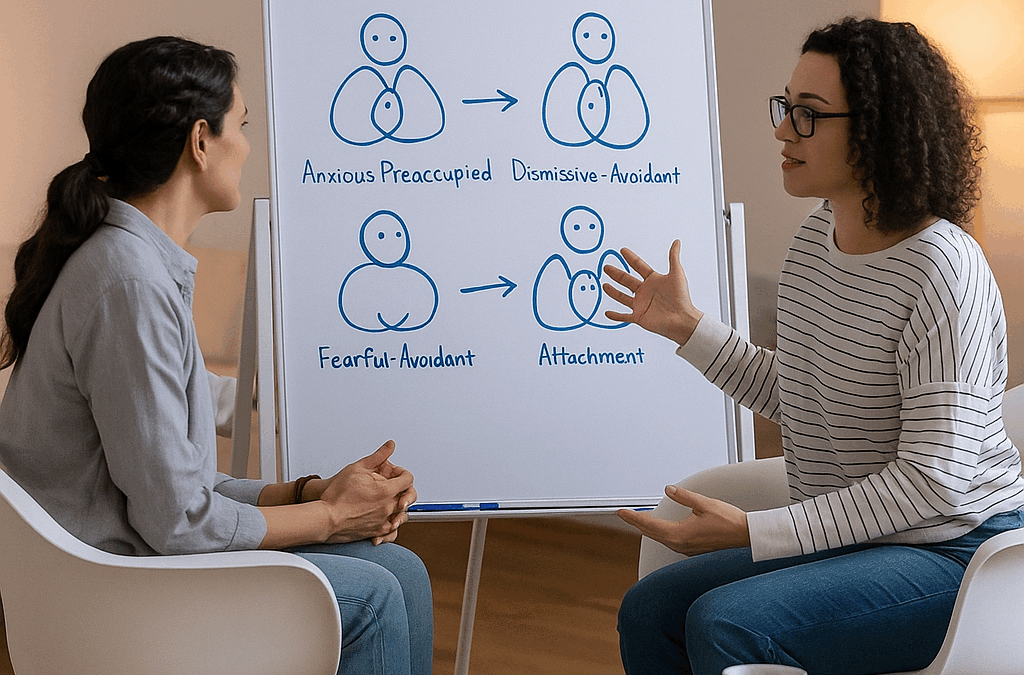
Therapists receive practical tools for recognizing and responding to attachment patterns in clients. Using attachment theory as the base, we study the four main styles, secure, anxious, avoidant and disorganized, and how each appears in relationships, behavior and emotional regulation.
You will learn to spot attachment dynamics from a client’s history, what they say and how they behave with others in therapy. The session stresses where attachment styles come from in development and how they affect mental health, self-esteem and relationships.
Evidence-based strategies for helping clients build healthier attachment behaviors are also covered, such as nurturing a secure therapeutic relationship, using mindfulness and emotion regulation skills and tailoring interventions to each style. Case studies give hands-on practice with diverse clinical scenarios as time permits.
For therapists who work with individuals, couples or families, the presentation offers ways to help clients grow in self-awareness, improve how they relate and feel better emotionally. Seeing attachment as central to human connection, therapists leave better prepared to support lasting, meaningful change.
Upon completion of this training, participants will be able to
- Understand Attachment Theory: Explore the foundational principles of attachment theory, including the four primary attachment styles—secure, anxious, avoidant, and disorganized—and their developmental origins.
- Identify Attachment Patterns in Clients: Develop the ability to assess and recognize attachment-related behaviors, relational dynamics, and emotional regulation patterns in diverse clinical settings.
- Examine the Impact of Attachment on Mental Health: Analyze how attachment styles influence clients’ self-esteem, interpersonal relationships, and overall emotional well-being.
- Apply Tailored Therapeutic Interventions: Learn and implement at least two evidence-based strategies, such as fostering secure therapeutic relationships, emotion regulation techniques, and interventions specific to each attachment style.
Syllabus:
Introduction
- Welcome and Overview
Objective #1: Understand Attachment Theory
- Foundations of Attachment Theory
- Four Attachment Styles and Clinical Characteristics
Objective #2: Identify Attachment Patterns in Clients
- Clinical Characteristics of Attachment Styles
- Assessment
- Attachment Dynamics in Therapy: Transference, Assessment, and Case Examples
Objective #3: Examine the Impact of Attachment on Mental Health
- Mental Health & Attachment Styles
Objective #4: Apply Tailored Therapeutic Interventions
- Intervention Strategies for Anxious, Avoidant, and Disorganized Clients
- Therapist Role as a Secure Base
- Case Vignette
Key takeaways/Q&A
- Key takeaways and reflections
- Open discussion and final thoughts
Social workers completing this course receive 2 Clinical asynchronous continuing education credits.
For other board approvals, this course qualifies for 2 hours of Clinical continuing education training.
Instructor: Samantha Silverberg, M.A., L.P.C.
Recording Date: April 2, 2025
CEUS On-Demand, LLC, provider #2274, is approved as an ACE provider to offer social work continuing education by the Association of Social Work Boards (ASWB) Approved Continuing Education (ACE) program. Regulatory boards are the final authority on courses accepted for continuing education credit. ACE provider approval period: 08/7/2026 - 08/6/2027. Social workers completing this course receive 2hrs Clinical continuing education credits.
CEUs On-Demand, LLC has been approved by NBCC as an Approved Continuing Education Provider, ACEP No. 7091. Programs that do not qualify for NBCC credit are clearly identified. CEUs On-Demand, LLC is solely responsible for all aspects of the programs.
System Requirements: Firefox, Chrome, Brave, Safari, Edge on any modern operating system (Windows, MacOS, Linux, Android, iOS). A desktop browser is recommended. We do not provide support resources for issues encountered using a mobile device.
Request for Special Accommodations: Learners can request special accommodations by contacting the administrative team at admin@ceus-ondemand.com